Executive Summary
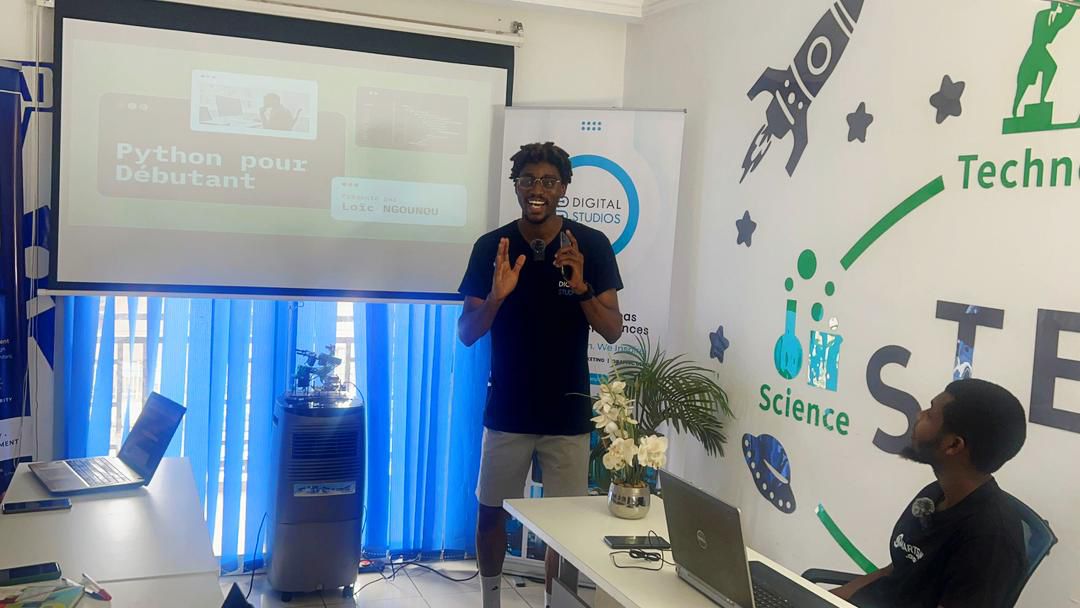
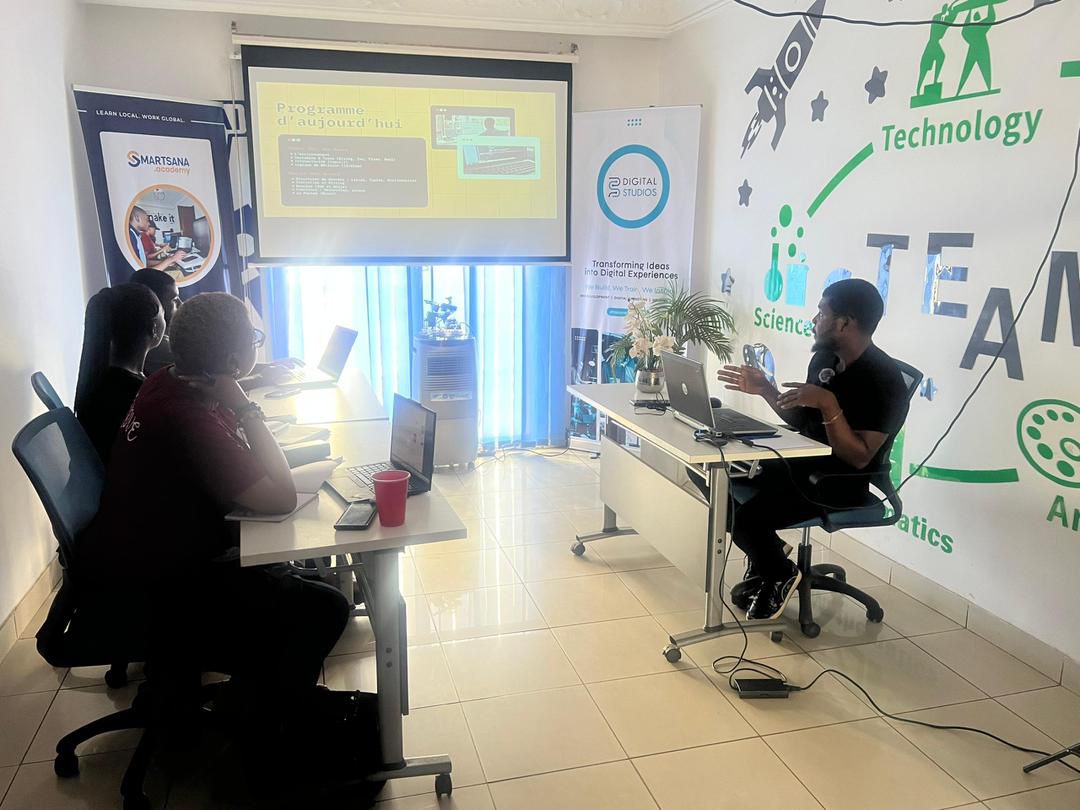
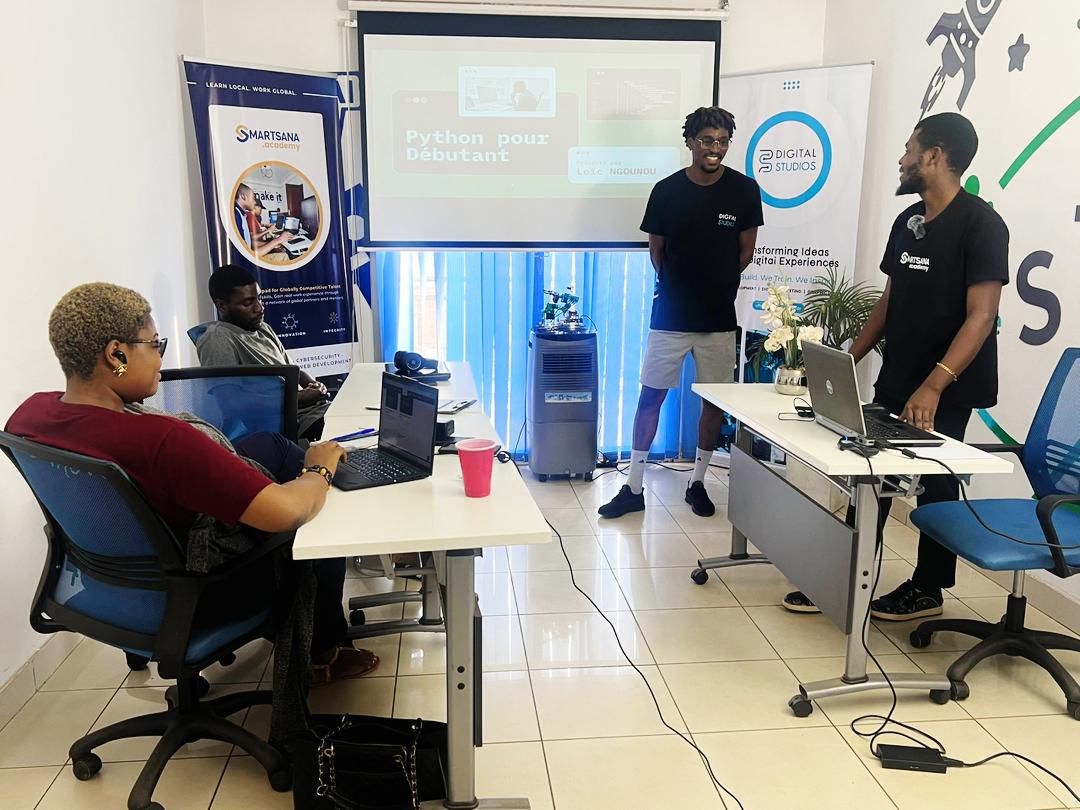
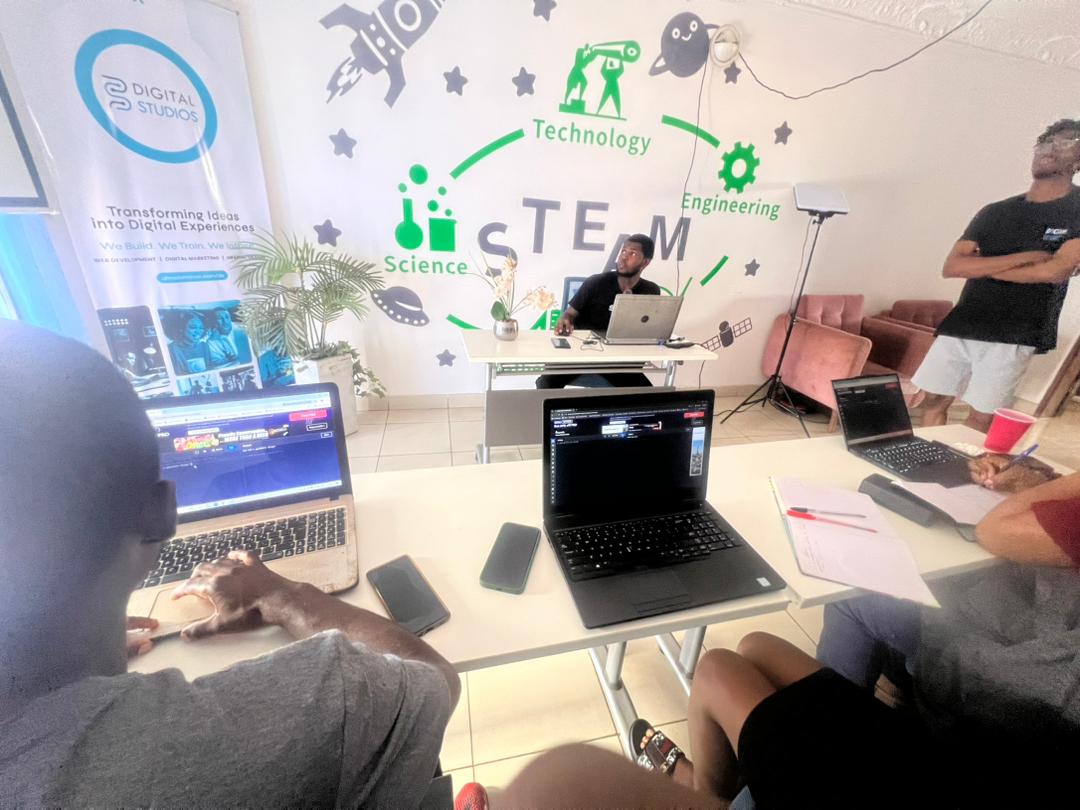
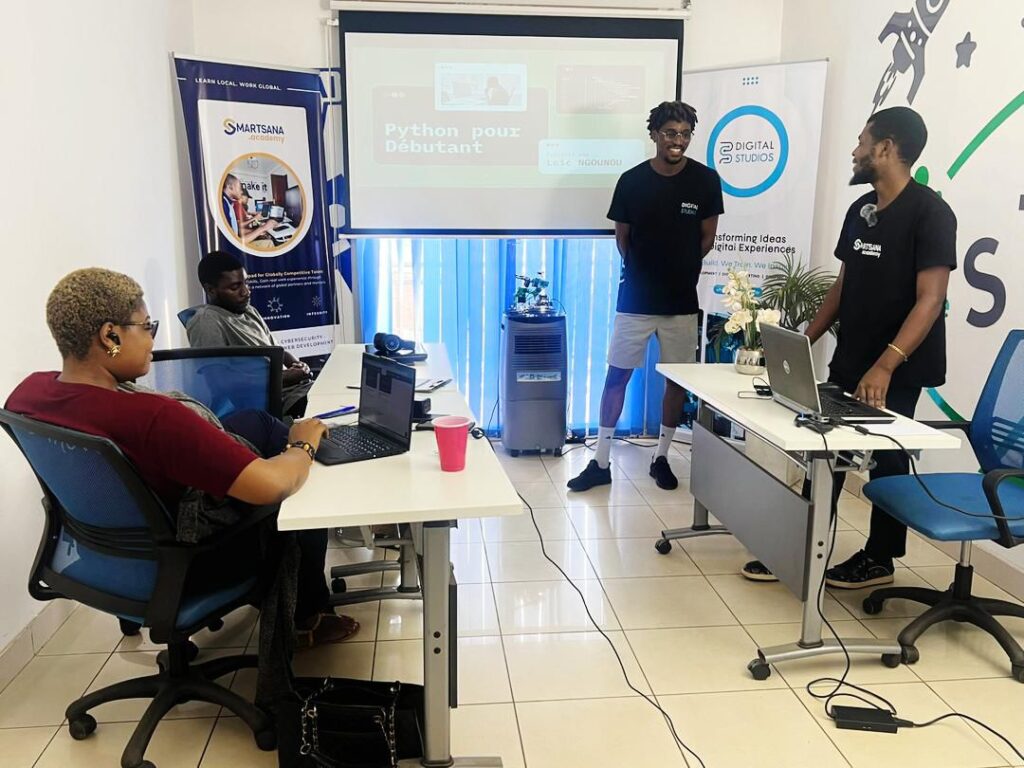
The “Introduction to Python for Beginners” workshop took place in a studious and collaborative atmosphere, with a clear objective: making programming accessible and immediately practical. The approach emphasized guided practice and pedagogical clarity, enabling participants to write their first lines of code and understand essential mechanisms. The progression remained structured, with a coherent sequence of explanation, demonstration, and application.
Educational Content
The plenary session presented the five fundamental building blocks: basic interaction (display, user input, type conversion), decision-making (if/elif/else), iterations (for, while), data organization (lists, dictionaries), and code reuse through functions (def, return). Each concept was illustrated with simple use cases and key messages (difference between text and numbers, conditional logic, controlled repetition, choosing between a list and a dictionary).
Practical Application and Results
Knowledge was reinforced through progressive practical exercises: basic calculations, conditional classifications, counting and table loops, list/dictionary manipulation (adding, reading, iterating), and refactoring into functions to improve readability. The format included micro-questions, a validation quiz, and close support, promoting autonomy, reasoning quality, and disciplined writing. By the end of the session, each participant had completed a set of exercises validating their understanding of the fundamentals.
Perspectives and Acknowledgements
Follow-up resources were provided, with the recommendation of regular practice (10–15 minutes per day) and incremental iterations on completed exercises (adding error handling, improving messages, function-based refactoring). We sincerely thank the participants for their commitment and the organizers for their support; this session provides a solid foundation for continuing learning and progressively industrializing the first scripts.